
Objective
The purpose of a solar water pumping system is to use solar energy to pump water from a source, such as a well or a borehole, to a desired location, such as a storage tank or a field for irrigation. This system provides a sustainable and cost-effective solution for areas with limited or no access to electricity, as it operates entirely on renewable energy.
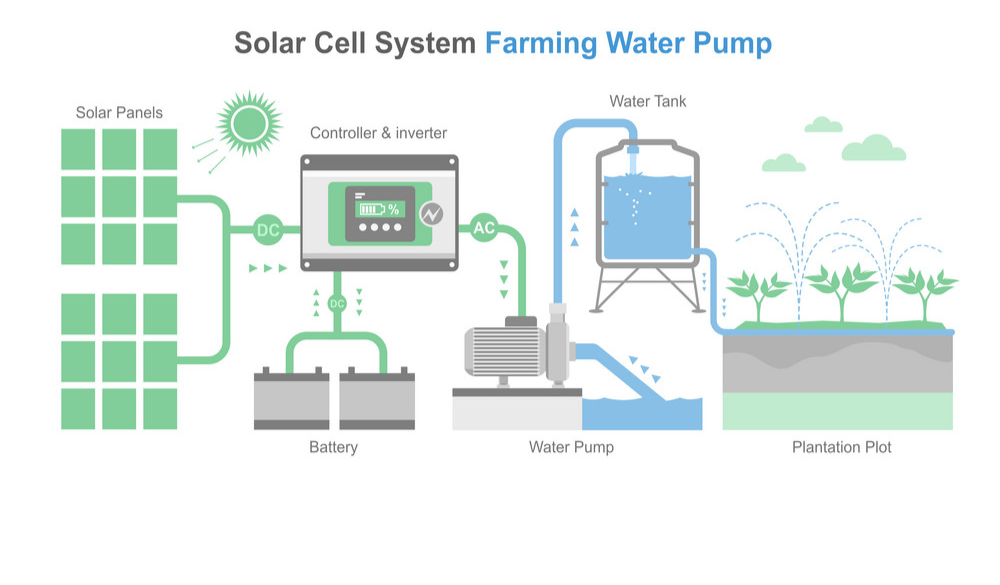
Solar water pumping systems typically consist of solar panels, a controller, a pump, and sometimes a storage tank. The solar panels capture sunlight and convert it into electricity, which is then sent to the controller that regulates the amount of power sent to the pump. The pump then draws water from the source and pumps it to the desired location, where it can be used for various purposes such as irrigation, livestock watering, or household use.
The benefits of using a solar water pumping system include reduced dependence on fossil fuels, lower operational costs, and increased access to clean water for agricultural and domestic use. Additionally, these systems can be installed in remote areas where grid electricity is not available, making them ideal for use in developing countries or in disaster relief efforts.
Why solar water pumping system to use?
There are several reasons why using a solar water pumping system is a good idea. Here are some of the main benefits:
Sustainability: Solar water pumping systems use renewable energy from the sun, making them environmentally friendly and sustainable. This means they reduce carbon emissions and help to combat climate change.
Cost-effective: Solar water pumping systems can save money in the long run by reducing electricity costs, which can be particularly beneficial in rural or remote areas where grid electricity is not available.
Reliable: Solar water pumping systems are often more reliable than traditional pumps as they do not rely on external electricity sources, which can be subject to power outages and failures.
maintenance: Solar water pumping systems require minimal maintenance, which means they are ideal for remote or hard-to-reach locations.
access: Solar water pumping systems can provide access to clean water in areas where it is not readily available, improving health and sanitation outcomes for communities.
Versatile: Solar water pumping systems can be used for a range of applications, including agriculture, livestock watering, and domestic water supply.
Components
A solar water pumping system typically consists of the following components:
- Solar PanelsSolar Panels: The solar panels are used to capture sunlight and convert it into electrical energy. These are usually made of photovoltaic (PV) cells, which generate direct current (DC) electricity when exposed to sunlight.
- ControllerController: The controller regulates the amount of electrical energy that is sent to the pump. It ensures that the system operates efficiently and protects the pump from damage.
- PumpPump: The pump is responsible for drawing water from the source and transporting it to the desired location. There are several types of pumps available, including centrifugal pumps, positive displacement pumps, and submersible pumps, among others.
- Storage TankStorage Tank: Depending on the application, a storage tank may be required to store the water that has been pumped. This is typically used for irrigation or livestock watering systems.
- Mounting StructureMounting Structure: The mounting structure is used to securely install the solar panels in a fixed position. This ensures that they are optimally positioned to capture sunlight throughout the day.
- WiringWiring: Wiring is used to connect the different components of the system together. This includes wiring between the solar panels, controller, and pump, as well as wiring for any other accessories that may be required, such as a float switch or pressure sensor.
Installation
The installation of a solar water pumping system involves several steps, including:
- Site Assessment: Before installation, the site needs to be assessed to determine the optimal location for the solar panels, pump, and storage tank. This includes evaluating the water source, measuring the distance between the water source and the location where the water is needed, and determining the amount of sunlight available.
- Design: Based on the site assessment, a system design is developed that includes the appropriate pump, solar panels, controller, and other components. The design will also include the necessary wiring and mounting structure for the solar panels.
- Preparation: The site must be prepared before installation can begin. This may include clearing vegetation, excavating a pit for the storage tank, and installing any necessary piping or valves.
- Installation: The solar panels are mounted in a fixed position, typically on a pole or a roof. The controller and pump are then installed, and the wiring is connected between the solar panels, controller, and pump. Finally, the water source and storage tank are connected to the system.
- Testing: Once the installation is complete, the system is tested to ensure that it is working properly. This includes checking the pump's flow rate, monitoring the battery charge, and verifying that the system can operate in low-light conditions.
- Maintenance: Regular maintenance is required to keep the system functioning properly. This includes cleaning the solar panels, checking the pump and controller for any issues, and monitoring the battery charge.