Objective
The purpose of a hybrid solar panel system is to provide a sustainable and reliable source of energy that can meet the demand of residential, commercial, or industrial buildings. The system can be designed to use the most appropriate renewable energy source depending on the location and energy needs.
A hybrid solar panel system combines the use of photovoltaic (PV) panels and other renewable energy sources, such as wind or hydro power, to maximize the energy output and ensure a consistent energy supply.
The hybrid solar panel system can also include energy storage, such as batteries or pumped hydro storage, to store excess energy produced during the day for use during peak demand times or when there is less sunlight.
Overall, the purpose of a hybrid solar panel system is to provide a cost-effective and efficient way to generate and store renewable energy, reduce reliance on non-renewable energy sources, and reduce carbon emissions.
Why Hybrid Solar panel system to use?
Hybrid solar panel systems are becoming increasingly popular because they offer several benefits over traditional solar panel systems or conventional grid-tied systems. Here are some of the key reasons why people use hybrid solar panel systems:
Improved energy efficiency: Hybrid solar panel systems can provide both electricity and heat, which makes them more energy-efficient than traditional solar panel systems. This is because they use the same panels to generate both electricity and heat, maximizing the use of available solar energy.
Increased energy independence: Hybrid solar panel systems can provide energy independence by allowing users to generate their own electricity and store it for later use. This reduces dependence on the traditional electrical grid, which can be unreliable or subject to power outages.
Reduced electricity bills: By generating their own electricity, users of hybrid solar panel systems can reduce their reliance on the electrical grid and lower their electricity bills.
Environmental benefits: Hybrid solar panel systems are a clean and renewable source of energy, which means they produce no harmful emissions and reduce the reliance on non-renewable energy sources.
Flexibility: Hybrid solar panel systems can be customized to meet the specific energy needs of a home or business, and can be designed to incorporate other renewable energy sources such as wind or hydro power.
Components
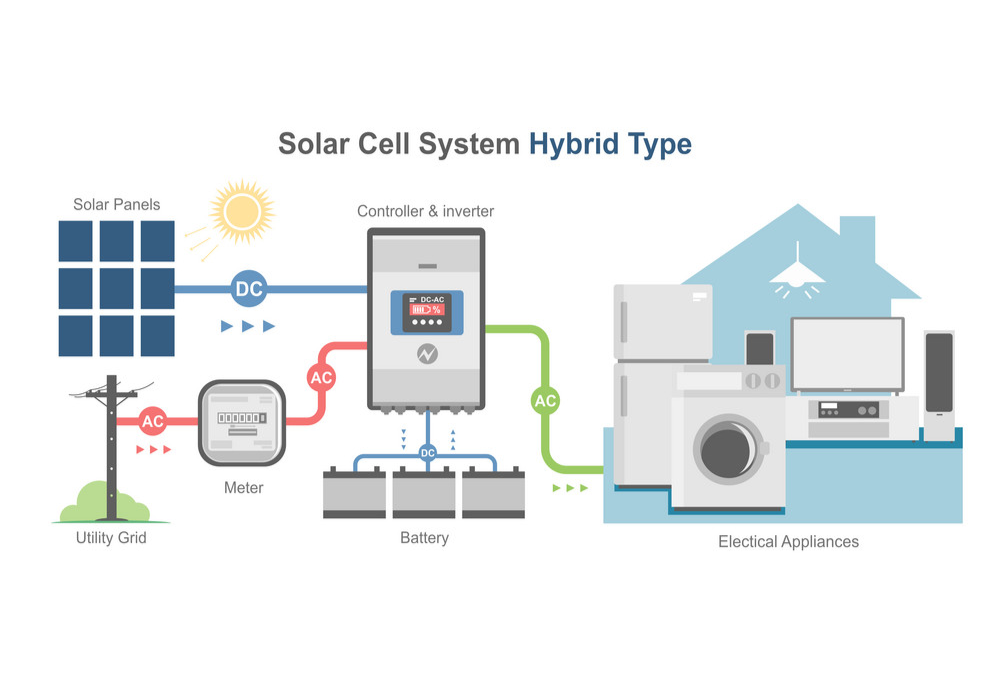
A hybrid solar panel system typically consists of several components, including:
- Solar panels: Hybrid solar panel systems use photovoltaic (PV) panels to generate electricity from sunlight and thermal panels to collect heat.
- Inverter: The inverter converts the direct current (DC) generated by the solar panels into alternating current (AC) that can be used to power electrical devices.
- Charge controller: A charge controller regulates the flow of electricity from the solar panels to the batteries, preventing overcharging or discharging.
- Battery bank: Energy storage systems, such as battery banks, can be included in a hybrid solar panel system to store excess energy produced during the day for use during peak demand times or when there is less sunlight.
- Wind turbine or hydro generator: A hybrid solar panel system can also incorporate wind turbines or hydro generators to supplement the energy generated by the solar panels.
- Electrical distribution system: The electrical distribution system includes components such as circuit breakers, fuses, and wiring to distribute the electricity generated by the hybrid solar panel system to the electrical loads.
- Monitoring system: A monitoring system allows users to track the performance of the hybrid solar panel system, including energy generation and storage levels.
Installation
The installation process for a hybrid solar panel system can vary depending on the specific system design and the location. However, here are some general steps involved in installing a hybrid solar panel system:
- Site assessment: A site assessment is carried out to determine the suitability of the location for the hybrid solar panel system. This involves assessing factors such as the amount of sunlight, wind, and water availability, as well as the structural integrity of the building.
- System design: Based on the site assessment and the energy needs of the building, a hybrid solar panel system is designed. This includes determining the number and type of solar panels, energy storage system, and other components needed for the system.
- Obtaining permits: The installer obtains the necessary permits from the local authorities before starting the installation process.
- Installation of solar panels: The solar panels are installed on the roof or on a ground-mounted structure, facing the optimal direction to maximize sunlight exposure. The PV panels are connected to the inverter and the charge controller, which regulate the flow of electricity to the battery bank.
- Installation of energy storage system: If included in the system design, the energy storage system is installed, and the batteries are connected to the charge controller.
- Installation of wind turbine or hydro generator: If a wind turbine or hydro generator is included in the system design, it is installed and connected to the electrical distribution system.
- Electrical wiring: The electrical distribution system is installed, including wiring, circuit breakers, and fuses, to distribute the electricity generated by the hybrid solar panel system to the electrical loads.
- Commissioning and testing: Once the installation is complete, the system is commissioned, and testing is carried out to ensure that it is operating efficiently and safely.
Appliances we can run
NOTE:
It is important to note that the energy requirements of appliances can vary greatly depending on the make, model, and usage. A qualified installer can help determine the appropriate system size and capacity based on the energy needs of the appliances to be powered. Additionally, it is important to use energy-efficient appliances to reduce energy consumption and maximize the benefits of a hybrid solar panel system.