Objective
The primary purpose of an on-grid solar system is to reduce or eliminate a homeowner's dependence on electricity
generated by traditional power plants, which often rely on non-renewable sources of energy such as coal or natural
gas. By generating electricity from solar power, an on-grid solar system helps to reduce carbon emissions and
promote the use of renewable energy sources.
This type of solar system is also known as a grid-tied or grid-connected system.
On-grid solar systems also offer financial benefits to homeowners. Any excess electricity generated by the solar panels can be fed back into the grid, which results in a credit on the homeowner's utility bill. This means that homeowners can save money on their electricity bills and potentially even earn money by selling excess electricity back to the grid.
Additionally, on-grid solar systems are reliable as they are connected to the electrical grid, which means that homeowners can still draw power from the grid if their solar panels are not generating enough electricity. This provides a backup source of electricity in the event of a power outage or during times when the solar panels are not generating enough power.
Why On Grid Solar Panel popular?
Here are some reasons why on-grid solar panel systems are popular:
Cost-effective: On-grid solar panel systems are generally more cost-effective than off-grid systems because they don't require expensive batteries for energy storage.
Efficient: With an on-grid solar panel system, any excess electricity that your panels generate can be sold back to the grid, reducing your electricity bills and increasing your savings.
Low maintenance: On-grid solar panel systems require very little maintenance as they do not have batteries that need to be maintained or replaced.
Eco-friendly:On-grid solar panel systems are eco-friendly and help reduce your carbon footprint as they produce clean energy without any harmful emissions.
Reliable: On-grid solar panel systems are reliable as they are connected to the electrical grid, so if your panels are not generating enough electricity, you can still draw power from the grid.
Flexible: On-grid solar panel systems are also flexible as they can be easily expanded, allowing you to add more panels as your energy needs increase.
Components
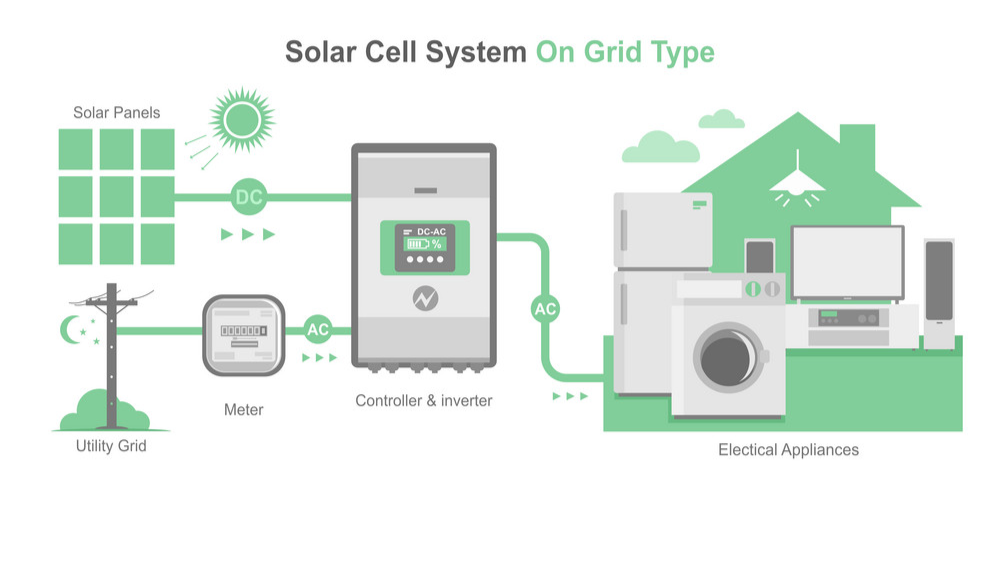
An on-grid solar system, also known as a grid-tied or grid-connected solar system, is a solar power system that is connected to the electrical grid. The main components of an on-grid solar system include:
- Solar panels: These are the primary components of a solar system that convert sunlight into electrical energy.
- Inverter: The inverter is responsible for converting the DC electricity generated by the solar panels into AC electricity that can be used by your home or business and can be fed back into the grid.
- Mounting structure: The solar panels need to be mounted on a sturdy structure to ensure they are secured and tilted at the correct angle to maximize energy production.
- Monitoring system: A monitoring system is required to track the performance of the solar system, including how much energy it is generating and feeding back into the grid.
- Grid connection: The solar system must be connected to the electrical grid via a grid-tie inverter, which allows excess energy to be fed back into the grid and credits to be earned for excess energy generated.
- Electrical switchgear: This includes circuit breakers, disconnect switches, and other equipment that helps to ensure the safe and reliable operation of the solar system.
Installation
- Choose the location and size of the system: Select the best location on your roof that receives maximum sunlight for most of the day. You will also need to decide on the size of the solar panel system based on your energy needs and roof space.
- Get necessary permits: Check with your local government to see if you need any permits to install the solar panel system.
- Order your solar panel system: Purchase your solar panels, inverters, and any other necessary equipment from a reputable supplier.
- Gather necessary tools and equipment: You will need various tools and equipment, including a ladder, drill, screws, and wiring, to install the solar panels.
- Install the mounting system: Install the racking and mounting system for your solar panels on your roof.
- Install the solar panels: Once the mounting system is installed, attach the solar panels to the racking using the appropriate hardware.
- Connect the wiring: Connect the solar panels to the inverter and electrical panel using the appropriate wiring.
- Install the inverter: Install the inverter in a suitable location close to the electrical panel and connect it to the solar panel wiring.
- Test the system: Test the system to ensure that it is working correctly.
- Connect to the grid: Finally, connect your solar panel system to the utility grid.