
Objective
The purpose of an off-grid solar panel system is to provide electricity in areas where there is no access to the utility grid. This can be in remote locations where it is difficult or expensive to connect to the grid, or in areas where the grid is unreliable or prone to power outages.
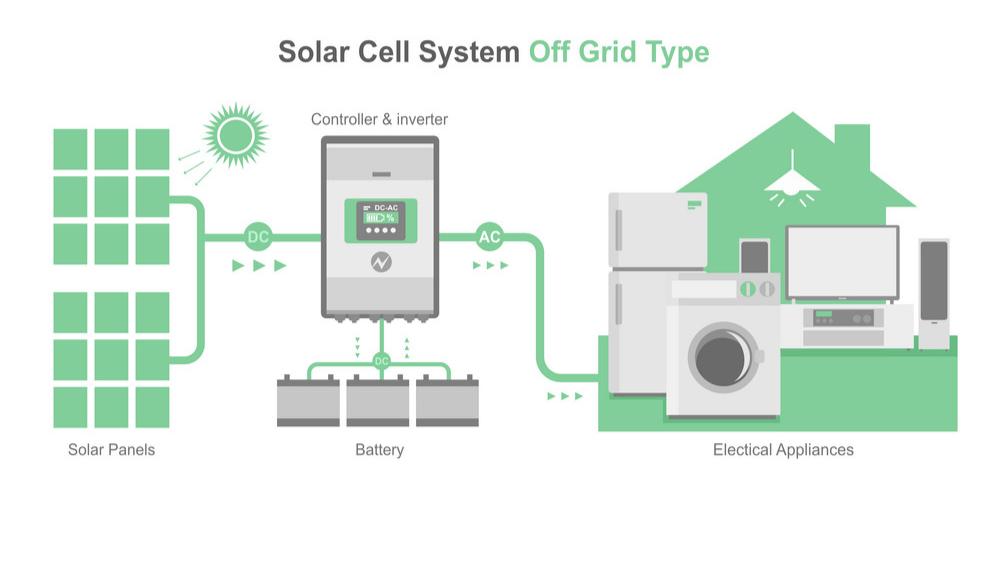
Off-grid solar panel systems typically consist of solar panels, a charge controller, batteries, and an inverter. The solar panels collect energy from the sun and convert it into DC electricity, which is then stored in batteries. The charge controller regulates the charging of the batteries to ensure they are not overcharged or undercharged. The inverter then converts the DC electricity from the batteries into AC electricity, which can be used to power appliances and other devices.
Off-grid solar panel systems are a popular choice for remote cabins, RVs, boats, and other off-grid living situations. They can also be used as backup power systems in areas with unreliable grid power. By using solar power, off-grid solar panel systems can provide a sustainable and renewable source of energy, without relying on fossil fuels or other non-renewable resources.
Why On Grid Solar Panel popular?
Off-grid solar panels are becoming increasingly popular for several reasons:
Energy independence: With an off-grid solar panel system, you can generate your own electricity and be completely independent from the electrical grid. This is especially useful for those living in remote locations where it is difficult or expensive to connect to the grid.
Lower electricity bills: By generating your own electricity, you can save money on your electricity bills over the long term. This is because you will not be paying for electricity from the utility company.
Environmental benefits: Solar energy is a clean and renewable energy source, and using off-grid solar panels can help reduce your carbon footprint and reduce your impact on the environment.
Reliability:Off-grid solar panels are a reliable source of energy, as they are not affected by power outages or other disruptions to the electrical grid. This makes them especially useful in areas with unreliable grid power.
Resilience: Off-grid solar panels can help increase the resilience of homes and communities by providing a reliable source of electricity in emergency situations or during natural disasters.
Components
The components of an off-grid solar panel system typically include:
- Solar panels: These are the main component of the system and collect energy from the sun to convert into electricity.
- Charge controller: A charge controller regulates the amount of electricity that is sent to the battery to ensure it is not overcharged or undercharged.
- Batteries: Batteries are used to store the energy generated by the solar panels for use when the sun is not shining.
- Backup generator: Some off-grid solar panel systems may include a backup generator to provide power when there is not enough solar energy available.
- Monitoring system: A monitoring system can be used to track the performance of the solar panel system and identify any issues that may arise.
- Electrical wiring: Electrical wiring is used to connect all the components of the system together and deliver power to the appliances and devices that need it.
- Mounting system: Solar panels need to be mounted securely in a location that receives maximum sunlight. A mounting system is used to secure the panels to a rooftop or other location.
- Disconnect switches: Disconnect switches are used to disconnect the system from the electrical grid to prevent power surges or other issues.
Installation
- Determine your energy needs: First, you need to determine how much energy you need to power your home or building. This will help you determine the number and size of solar panels, batteries, and other components you will need.
- Site evaluation: Next, you need to evaluate the site where you plan to install the solar panels. You should consider factors such as the angle and direction of the roof or mounting location, shading from trees or buildings, and the overall suitability of the location for solar energy production.
- Design the system: Using the information you gathered in steps 1 and 2, you can now design your solar panel system. This includes selecting the appropriate solar panels, charge controller, batteries, inverter, and other components.
- Obtain necessary permits: Before installing your solar panel system, you may need to obtain necessary permits from your local government or utility company. This can include building permits, electrical permits, and interconnection agreements.
- Install the solar panels and mounting system: Once you have obtained the necessary permits, you can install the solar panels and mounting system. This may involve installing brackets or rails on the roof or ground, and securing the panels to the mounting system.
- Install the charge controller, batteries, and inverter: Next, you can install the charge controller, batteries, and inverter. This involves connecting the various components together using electrical wiring.
- Connect the system to appliances and devices: Finally, you can connect the solar panel system to the appliances and devices that you want to power. This involves running electrical wiring from the inverter to the electrical panel in your home or building.
- Test and commission the system: Once the installation is complete, you should test and commission the system to ensure that it is functioning properly and producing the expected amount of electricity.